November fills museum rooms, galleries and festival screens with work that asks how exile, memory and new national identity are shown and discussed. A Berlin historical museum examines links between colonial violence and Nazi violence; an American museum in Baltimore presents Senegalese tapestries until 7 March 2027, the first U.S. exhibition of its kind in 45 years.
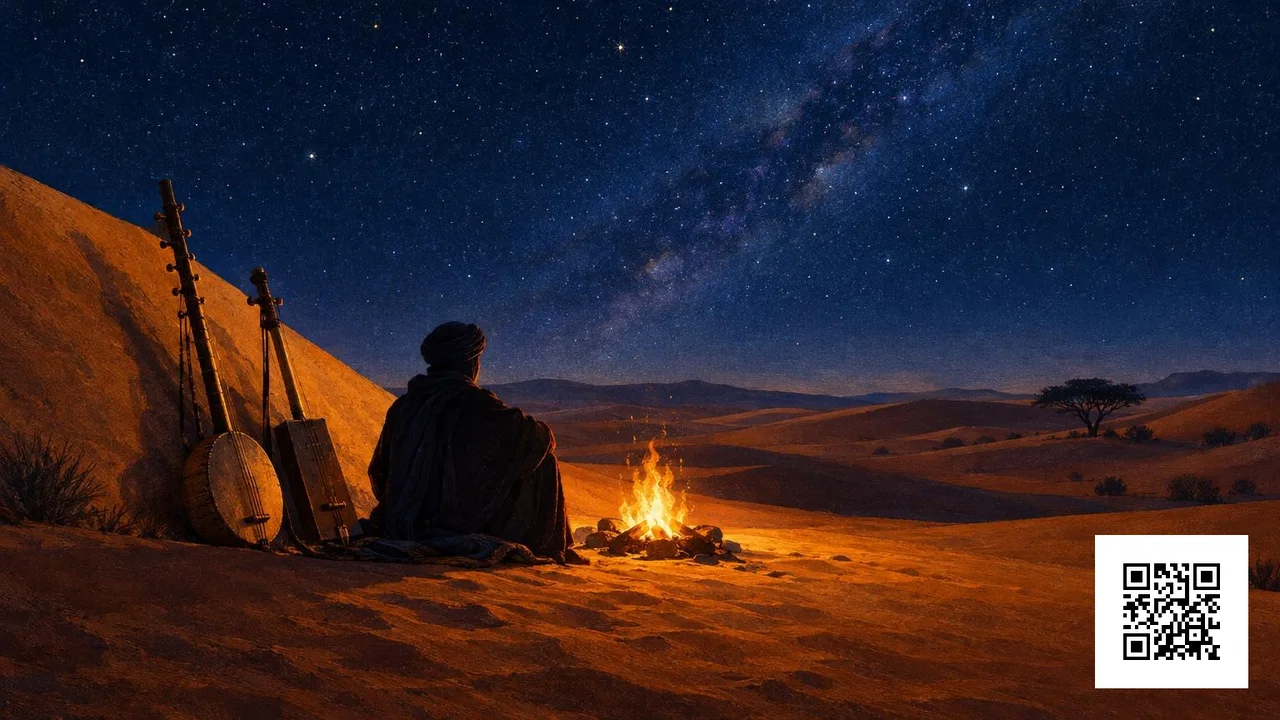
For listeners who move between screenings and late gallery hours, Sand Memory is a quiet Sahel sound to carry with you: the single Sand Memory is presented as a Desert Blues piece at 78 BPM, sung in Tamasheq with French and Sahelian phrases, built from slide and hybrid kora-guitar textures, steady hand percussion and a warm low vocal. It is a compact antidote to loud festival corridors, a small hush that gives you « Le goût de ça », the taste of that.
Exhibitions, tapestries and film programmes
This month’s line up stitches material art and moving image into the same conversation. The Baltimore tapestry exhibition runs until 7 March 2027 and includes about a dozen large scale works mainly produced at a state supported decorative arts manufactory in Thiès. That show arrives alongside Paris gallery openings from 5 November and four site specific metal sculptures being installed from 9 November that question how colonial exhibitions are presented without reproducing violence.
Film events add scale and public reach. A Hamburg African film festival screens 36 films from 21 African countries from 5 to 15 November, while Dak'Art opens from 19 November with 76 proposals framed around (anti)fragility. Rencontres de Bamako begins on 26 November and runs for two months with 49 artists, including 25 women, from 26 countries. According to the original report, these programmes together create a month in which visual practice and cinema foreground exile and postcolonial memory.
When you read schedules, look for moments where tapestry, painting and film put private stories next to public histories. The presence of woven, sculpted and screened works means conversations about craft, ritual and worker identity are in view across museums and galleries this November.
How Desert Blues appears across AFRIKANA
AFRIKANA groups several Desert Voices pieces that share Tamasheq and Sahelian references. Nearby titles on the site list Tamasheq, French and Sahelian languages under the same Desert Voices label, so listeners can place single-voice hymns beside more communal recordings. Use the site to compare pacing and chorus structures between those pieces and hear regional variation in real time.
Tempo shifts mark clear differences. Sand Memory stands at 78 BPM and opens space for long vocal turns and small melodic variations supported by sliding string textures and steady hand percussion. By contrast, Ténéré Voices on AFRIKANA opens at 100 BPM and puts a single male line into a more insistent call-and-response; Azelik Rhythm is presented at 132 BPM and pushes phrasing toward a forward, dance-ready pulse. Try listening to Sand Memory after a faster track to notice how much the breath of the voice changes the room.
If you want quick entry points, start with a contextual read: Ténéré Voices, a Sahel hymn in Tamasheq, then shift to Azelik Rhythm: Tamasheq lines, French hooks and Sahelian winks and come back to Sand Memory to hear the smaller, meditative gestures. For a broader browse, visit Heart of Africa : tous les articles or explore playlists via Toutes les playlists.
Pairing the single with festival evenings
Sand Memory sits well as an evening companion between screenings and gallery visits. The single’s layered slide textures and hybrid kora-guitar shapes a narrow, hypnotic field that does not collide with loud public programming, which matters when large events such as the international art fair in Lagos run from 5 to 8 November with participants from more than 70 countries.
Regional festivals compress attention: a Pays d'Apt film festival runs 6 to 10 November with 20 feature films, three short-film programmes and 41 screenings; other events stage dozens of films and exhibitions in a few days. In those concentrated moments, a measured single keeps the Sahelian thread alive without competing with headline work. Use Sand Memory as a reflective pause between screenings, and notice where the Tamasheq lines sit against images and light.
The video for the single appears after this chapter and is a direct way to follow the sound. If you want the app while you move between venues, check the AFRIKANA app for streaming and radios; it lets you keep that thread with you on mobile.
Desert Blues (Tishoumaren / Assouf)
Desert Blues, called Tishoumaren or Assouf in regional terms, is rooted in Saharan and Sahelian vocal practice and commonly sung in Tamasheq with French and Sahelian languages woven in.
Origins and development
The style emerges where desert routes, camp life and migratory circulation meet. It grew around nomadic storytelling and seasonal gatherings, evolving into an idiom that moves from intimate solo voice to pieces designed for festival stages and diasporic listeners.
Defining traits
Typical traits include extended Tamasheq vocal lines, call-and-response structures, sliding string textures and steady hand percussion. Notes for the featured single name slide and a kora-guitar hybrid, a warm low vocal timbre and clear rhythmic support. Tempos vary across the style; Sand Memory’s 78 BPM opens room for repetition and meditative phrasing.
How this single fits
Sand Memory occupies the style’s quieter edge. Its measured tempo lengthens vocal turns and foregrounds texture rather than propulsion. The hybrid string sounds and steady percussive support place storytelling and memory at the centre, favouring tone and space over force.
Where to go next
After this single, explore other Tishoumaren pieces on AFRIKANA to compare call structures and pacing. Neighbouring Desert Blues recordings show how similar languages host different energies, from solitary hymns to chorus-led, faster pulses.
Original report: Read the original report on RFI