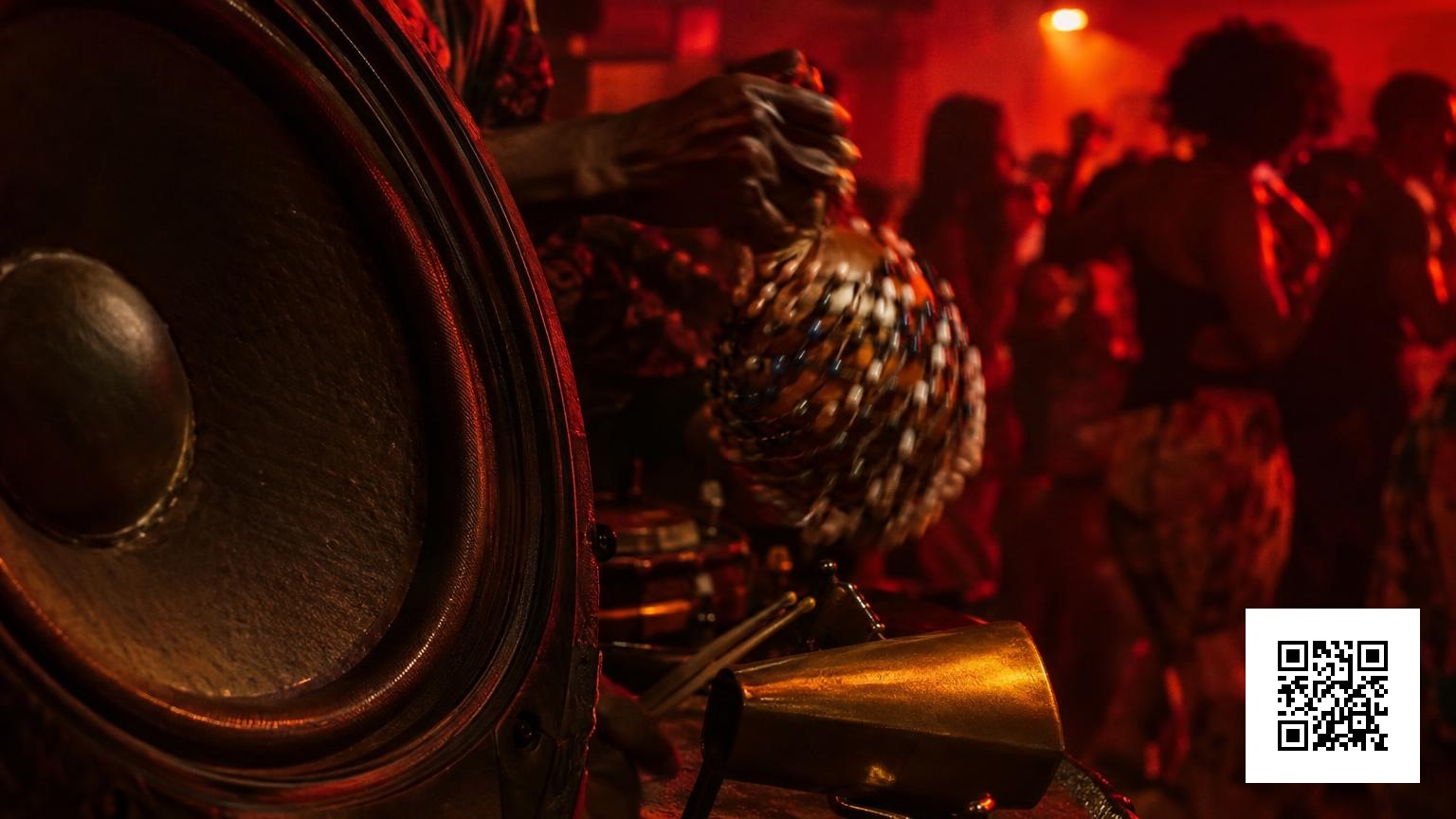
Má sún mọ́ mi begins on a steady 126 beats per minute. That number is the organising spine: every element arrives to a fixed pace and finds its role against that mid-120s heartbeat.
The song is labelled Yoruba Afrohouse × Shekere Drive × Lagos Tribal Club and sung in Yorùbá about power and desire. The mood tags are hypnotic, sensual, proud, hot, tense and masculine, and those words map closely to what the instruments and the voice do as the track unfolds.
The pulse and the tempo
At 126 BPM the track sits in club territory without hurry. The kick pattern locks time, so the small changes that follow read as gestures inside a strict frame rather than shifts of speed.
Because the tempo is fixed, the song builds drama through placement. Tiny accents and the timing of entries become signals: a brief absence of a top figure, a delayed return of a loop, a spare vocal note landing off the downbeat. Le goût de ça (the taste of that) lives in those micro-decisions.
Listen loud and you notice how the steady pulse allows the high end to dance over a heavy bottom. At lower volumes the detail is clearer; at club volume the beat is felt as much as heard.
High register: frantic shekere and metallic agogô
The top of the mix is dominated by a shekere played in a rapid figure. It keeps shaking, supplying a continuous, nervous shuffle that frames every phrase.
A metallic agogô cuts through with bright, bell-like strikes. Those hits act like punctuation, marking phrase ends and giving emphasis to selected syllables in the vocals.
Notice when the agogô and the voice meet. Those moments make the voice part of the rhythmic fabric: syllables become percussive events as much as carriers of meaning.
Low end: the Lagos club bass
Under the rattle and the bells sits a deep Lagos club bass. It does not race; it anchors. The low notes arrive at measured points and create a gravitational pull for the rest of the groove.
The arrangement plays with that weight. When the bass holds back the upper parts feel exposed, hot and urgent. When it returns the groove regains heft and the room changes shape.
In a club the bass is a physical presence. On headphones it becomes a structural reference you use to track the song as it opens and tightens.
Voice, Yorùbá and the contest of desire
Vocals are delivered in Yorùbá and placed tightly inside rhythmic slots. The voice answers the beat; it queries the high figures and occasionally locks with the agogô strikes.
The theme is power and desire. Phrases are assertive. Repetition and call-and-response gestures build a sense of contest: two bodies testing one another, neither wanting to give in first.
Tension is sustained by returning motifs and by keeping release just out of reach. That sustained pressure is what makes the track feel both sensual and slightly tense.
Lagos club context and who dances
The style name points to Lagos club rooms where house tempo meets local rhythmic speech and shaken instruments. This track is arranged for dancers who expect a steady beat and for moments when small rhythmic details decide the mood.
At peak hours the pattern encourages a controlled heat: bodies sync to the 126 BPM and respond to punctuation from the agogô and to the shekere’s relentless subdivisions.
If you want to place this listen among related reads, start with Heart of Africa : tous les articles and explore closer examples in Beae no wɔ hɔ, 130 BPM Twi Afrohouse Challenge. For a different club framing try Sama Yoon by Mamadou Fall: Wolof palm-wine for migration and memory.
Yoruba Afrohouse × Shekere Drive × Lagos Tribal Club
This label places the track in Lagos-derived club practice where a house tempo combines with Yorùbá vocal phrasing and local shaken and metallic instruments. The approach keeps the beat front and folds language into the dance.
Where the style comes from
This approach developed in Nigerian club rooms that adapted house tempos to local songmaking and dance habits. Producers kept the mid-120s pulse while integrating Yorùbá speech rhythms and long-used shaken instruments so music could serve both language and movement.
Defining traits
Tempo sits in the mid-120s; here it is 126 BPM. High frequencies are dominated by rapid shekere figures and bright metallic agogô strikes. The low frequencies rely on a deep Lagos club bass that anchors the arrangement. Vocals in Yorùbá are concise and rhythmically placed so they function as a rhythmic voice within the groove.
How this track fits or bends the style
Má sún mọ́ mi follows the template closely: frantic shekere and metallic agogô ride a heavy Lagos bass while Yorùbá vocals stage power and desire. The song's description calls it hypnotic Yoruba Afrohouse driven by frantic shekere, metallic agogô and deep Lagos club bass, a choice of words that matches the recorded sounds.
Styles to explore next
To compare textures try faster Afrobeats grooves or quieter club pieces that rebalance top and bottom. You can also listen to other close reads in our archive such as Anidasoɔ's four Twi tracks of measured masculinity and browse Toutes les playlists to place this track among related selections. For streaming on the move see L'application AFRIKANA, which helps you find similar club and regional sets.