Rhythm and the pulse
At a strict 130 BPM the track moves with single-minded momentum. The kick and four-on-the-floor drive give the piece a mechanical insistence, while percussion accents arrive like staccato commands. Phrasing is tight and repetitive: short patterns layer and subtract to escalate tension rather than relax it. On the floor this maps to sharp, punctuated movement—stomps, quick hip pops and clipped footwork—because the arrangement leaves little room for floating grooves; each hit asks for an immediate, physical reply.
Drums, bass and metal percussion
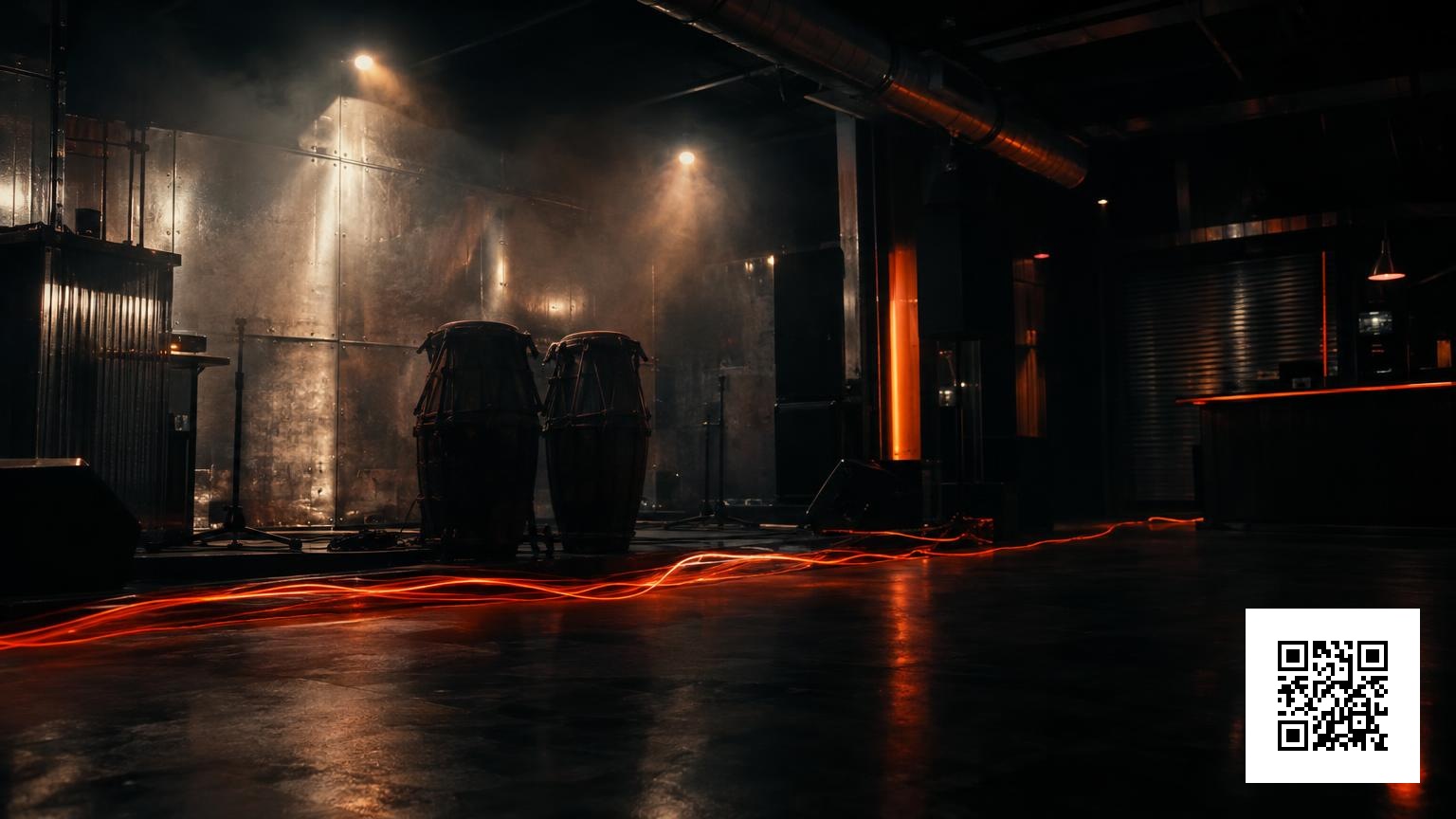
Atumpan
Tuned wooden strikes cut through the mix with a hollow, pitched thump. Hearing the atumpan in this context is to notice how hand-drum timbres carry pitch and rhetoric: they punctuate phrases and suggest call-and-response even amid electronics. The hits are compact and tuned enough to read as melodic punctuation rather than diffuse texture.
Distorted bass and metal
Low frequencies are treated aggressively—saturation and distortion turn bass into a gnawing, tactile force that colours the whole soundstage. Metal percussion provides bright, ringing transients that slice above the low end, adding an industrial sheen. Together these textures create a tactile contrast: wooden weight, gritty sub, and metallic bite, so every strike has both mass and edge.
Twi voice and rhythmic speech
Vocals are delivered in Twi, with brief English fragments used like exclamation points. Twi’s tonal contours mean the voice sits as much inside rhythm as in pitch, so lines land as percussive events. The delivery is compact and confrontational—short, repeated phrases that behave like rhythmic instruments. As a direct challenge, the vocal parts lock tightly with drum hits, interrupting and daring rather than floating above the groove.
Accra vibe and regional roots
The track places Akan drum sonorities and Twi phrasing into a club-tempo context typical of Accra scenes. Traditional timbres aren’t softened; they’re amplified and grafted onto electronic frameworks so atumpan tones remain audible even as distortion and deep bass push toward a sound-system aesthetic. That urban framing makes the music both local in linguistic and percussive identity and metropolitan in its loudhouse presentation.
Energy, mood and the dancefloor
Brutal, cocky, explosive—these are structural qualities here. Motifs repeat until they feel like challenges, then escalate through subtraction and sharper attacks. The track is designed for heavy systems and compact rooms where low end can be felt as a physical force and metallic hits cut through the crowd. It functions as provocation: a vocal dare over commanding percussion that invites display, competition and assertion on the floor. This is music to be heard loud and answered with movement.
Accra Hammer Afrohouse
Accra Hammer Afrohouse places Ghanaian percussive timbres and vocal idioms inside a club-ready electronic framework. It’s a strand of contemporary West African dance music that translates Akan tuned drums and local-language calls into a forward-driving house aesthetic.
Origins and development
Rooted in Accra, the style grew as producers and performers grafted tuned hand drums and call‑and‑response vocal practices onto steady four‑on‑the‑floor club beats. Atumpan and other wooden, pitched drums were brought into electronic contexts, keeping drum timbres and rhythmic phrasing central while adapting to loud, bass‑heavy sound systems.
Defining musical traits
Typical tempos sit around 120–130 BPM with a relentless, propulsive pulse rather than loose swing. Drum work pairs steady kick patterns with syncopated, tuned hand‑drum hits; bass is often saturated or distorted to become an aggressive low‑end mass; metal percussion provides bright, cutting accents. Vocals favour short, rhythmic calls or chants in local languages, placed tightly against the groove.
How this track fits
This recording runs at 130 BPM: Twi vocals deliver a direct, confrontational challenge over tuned atumpan strikes, distorted bass and metallic percussion. Arrangements use clipped, repeatable patterns and hard attacks—the atumpan act as tuned punctuation, the bass a gnawing, saturated rumble, and metal hits add an industrial sheen—yielding a brutal, cocky, dancefloor‑ready energy.
Neighbouring styles to explore
Amapiano, Highlife