Zinli acoustique × Modern Textures: The Culture, Stories and Sound Behind "What the Elders Left"
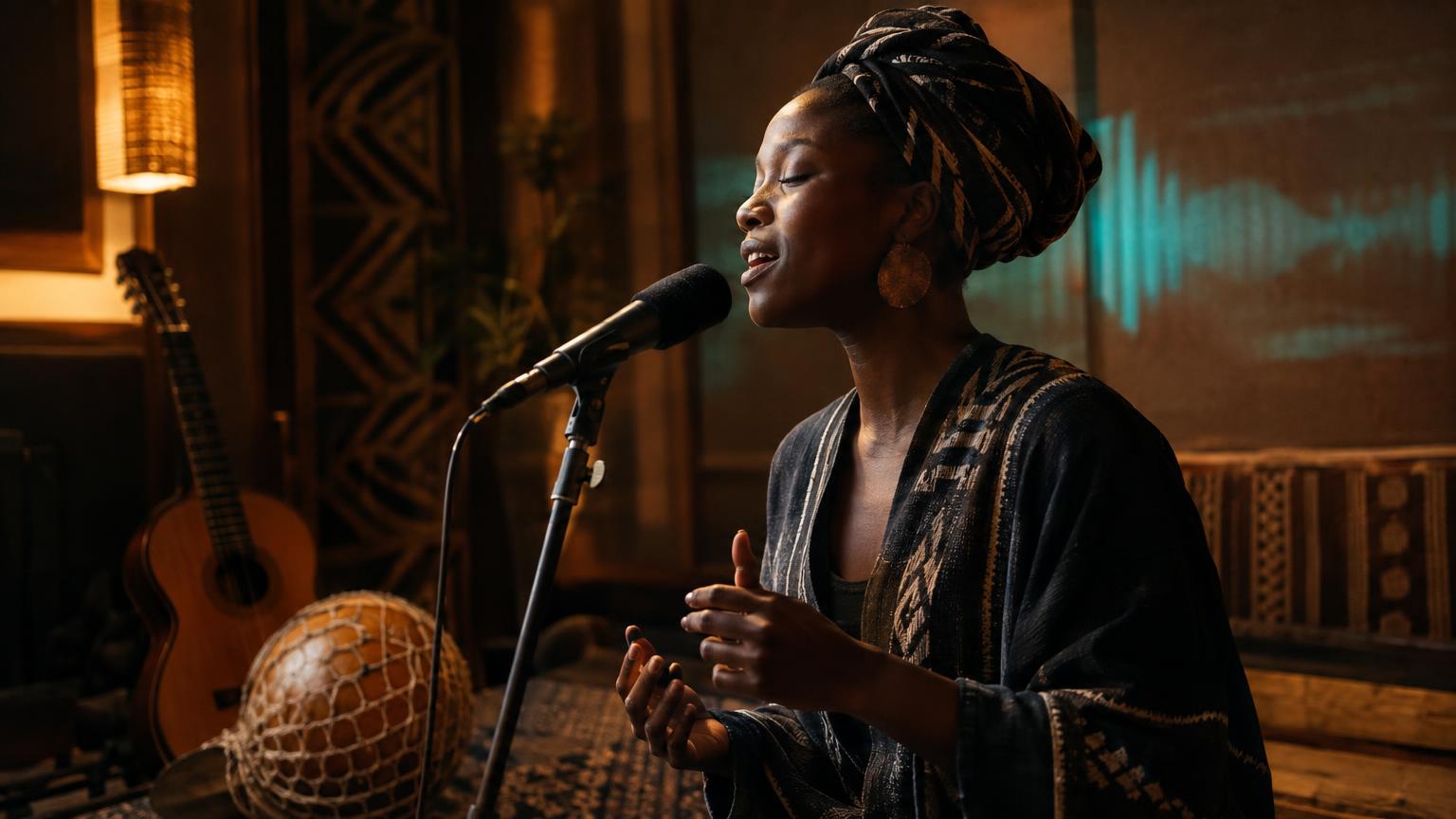
“What the Elders Left” frames cultural inheritance through a careful fusion of Zinli acoustique and modern textures, sung in Français and Fongbé. The song’s mood—dignified, organic, deep, luminous and progressively powerful—guides its narrative and sonic decisions.
This article outlines the cultural context that informs the lyrics, the musical language that carries them, and practical notes for listeners and creators who want to understand or reproduce the song’s atmosphere. A published AFRIKANA video and an illustrative artwork concept are included for reference.
Cultural roots and storytelling
The song centers on Héritage culturel: memories, ethics and everyday practices passed down through generations. Lines in Fongbé anchor the work to local cosmologies and kinship terms, while Français provides wider accessibility and poetic framing.
Stories evoked in the lyrics are concrete and communal—household rituals, names of places, proverbs and the cadence of oral transmission. That specificity gives the song emotional authenticity and invites listeners to listen for layered meanings rather than generalizations.
Musical language: Zinli acoustique meets modern textures
Zinli acoustique here prioritizes resonant acoustic instruments—calabash, classical guitar or acoustic lute, soft percussive brushes—and close, warm microphone placement to preserve organic detail. Those elements create the dignified, intimate base of the track.
Modern textures appear as subtle ambient pads, low-register synth swells and spatial delays that expand the mix without overpowering acoustic timbres. Arrangement choices are progressive: sparse at first to foreground voice and language, then layering rhythmic motifs and harmonic support to reach a gradual, powerful climax.
Vocal production balances clarity for Français lines with a more breathy, present treatment for Fongbé phrases, honoring their oral quality. Simple call-and-response or vocal harmonies drawn from regional melodic patterns reinforce communal themes.
Sharing, impact and resources
Recorded and arranged with cultural care, the song functions as both personal testimony and community resource—useful in educational settings, cultural programs and curated playlists that highlight bilingual or hybrid expressions.
For listeners who want direct reference, AFRIKANA published a supporting video titled “What the Elders Left — AFRIKANA Catalogue” (published 2025-03-12). That catalogue entry provides a dated, public record of the piece and its attributed style (Zinli acoustique × textures modernes) and languages (Français × Fongbé).
If sharing or distributing the song, include translations or short annotations for Fongbé lines to facilitate cross-cultural understanding. When relevant, promote it via community-focused apps or platforms that support multilingual metadata and contextual notes so audiences can engage with both sound and story.