Rhythm and how it moves the body
Set at 129 BPM, the track insists on forward motion: not a limp shuffle but a poised, insistently danceable tempo. The beat feels compact and urgent — enough speed for floor-facing energy, with space between hits so the ear catches small micro-rhythms. Those gaps are where the track breathes, letting reversed string swells and clipped percussion puncture the groove and force the listener to lean in with their feet.
Instruments and what they are in their sound world
Prepared kora
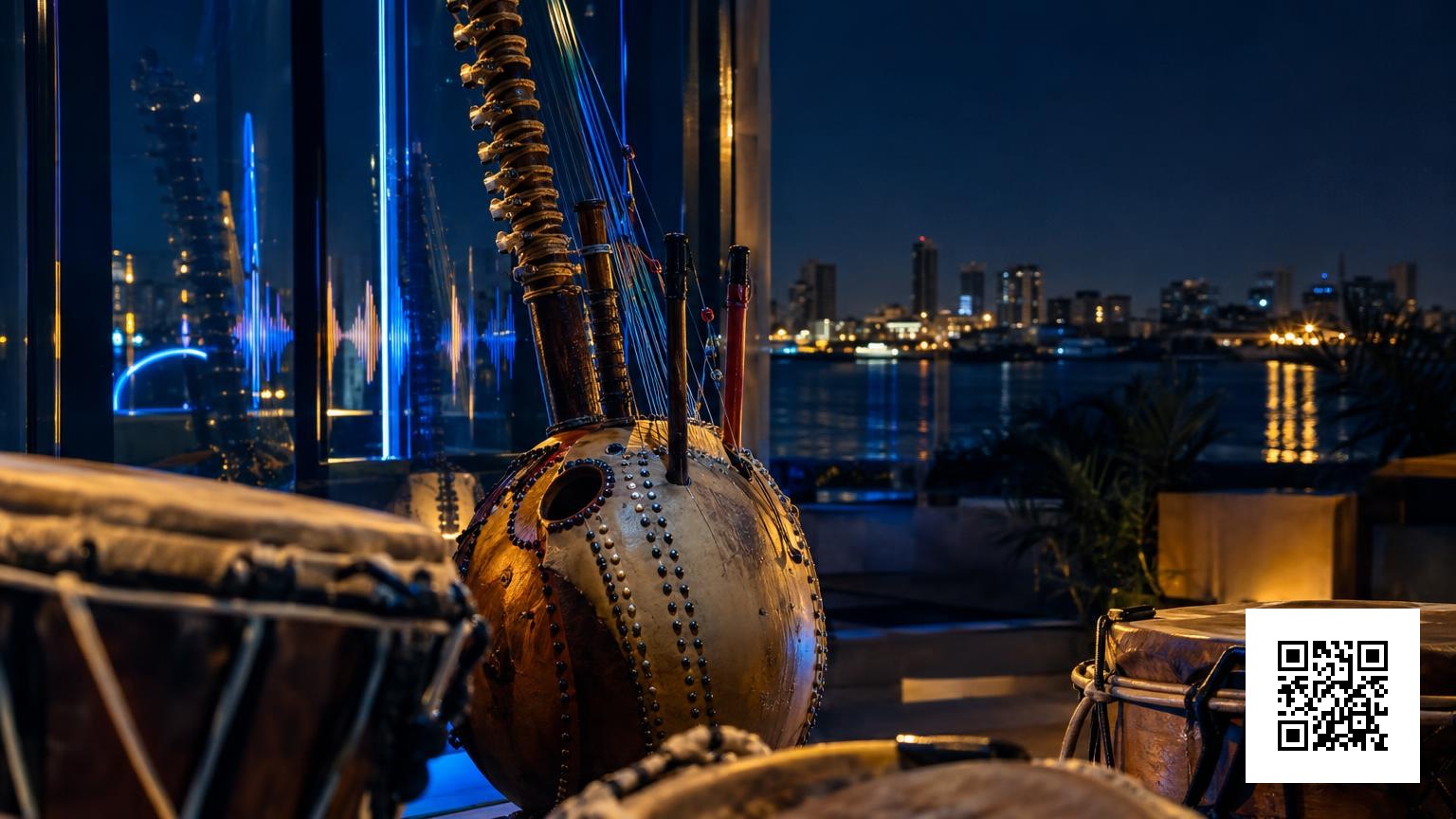
The kora here is altered into angled, metallic plucks. It behaves less like an acoustic harp and more like a tuned set of percussive echoes: brittle attacks, ringing overtones, and damped sustain that sit sharply in the midrange. The preparation turns traditional finger patterns into timbral gestures that cut through a dense, electronic mix.
Reversed strings and sabar fragments
Reversed strings supply slow, breathing swells that drag phrases backward into place, creating tension before the next beat drops. Against that, sabar fragments arrive as clipped, high-velocity hits — not long drum solos but short, crisp punctuation. Those sabar snippets give the track an ancestral snap, translated into a club context where each hit acts like a signpost for movement.
The language: Wolof's voice and a French command
The track is sung in Wolof; the vocal delivery sits in the mix as a percussive instrument, its consonants and rhythmic vowels driving phrasing as much as melody. A French theme appears plainly as: Ne filme pas. Vis-le. That instruction, placed next to Wolof vocal lines, turns the music into a prompt: listen with your body before you record it.
The region and tradition it gestures toward
Dakar is the address named for the track — the sound draws on that city's club vocabulary where modern dance rhythms and older percussion practices coexist. The use of sabar material and the kora’s reworking point to a practice of folding recognized Senegalese textures into a dance-floor language, where local sonic markers are reconfigured as propulsive elements for contemporary sets.
The energy and who it is for
Moods attached to the track — Futuristic, Explosive, Hypnotic, Free, Sexy, Youthful — are accurate signposts for its use: a late-night selector slot, a physical rehearsal for dancers, or anyone wanting a focused, forward-moving cut that rewards repeated plays. The piece asks for attention and movement rather than passive listening; its sharpened plucks, reversed swells and punctuated percussion make it ideal for listeners who want sound that commands the floor.
A companion video titled “Xool ma, African Afrohouse Music | Wolof Dakar Dance Song” places the Wolof voice and Dakar reference visually alongside the music, reinforcing the track’s insistence that some moments are for living, not for filming.
Dakar Reverse-Kora Afrohouse
It occupies a Dakar-referenced strand of contemporary African dance music, where club tempos meet local instrumental colours drawn from Senegalese practice.
Roots in Dakar club scenes
Sénégal and Dakar are explicitly invoked: the track sits within a Dakar-labelled club vocabulary and alongside other Wolof-language dance entries on AFRIKANA. That placing ties it to the city’s ongoing exchange between popular club forms and traditional Senegalese rhythmic idioms.
Defining sonic traits
The piece is set at 129 BPM and foregrounds three named textures: prepared kora, reversed strings and sabar fragments. Those elements suggest a club-paced, forward momentum; the presentation pairs that pulse with moods listed as Futuristic, Explosive, Hypnotic, Free, Sexy and Youthful.
How this track aligns
Here the 129 BPM Afrohouse pulse is the organizing tempo while prepared kora and reversed string treatments provide altered, non-standard timbres; sabar fragments supply clipped percussion references rather than full live ensembles. Vocally it uses Wolof imperative material, and the thematic line given in French is Ne filme pas.
Styles to explore next
For neighbouring sounds check Mbalax Moderne and Modern Festival Mbalax.