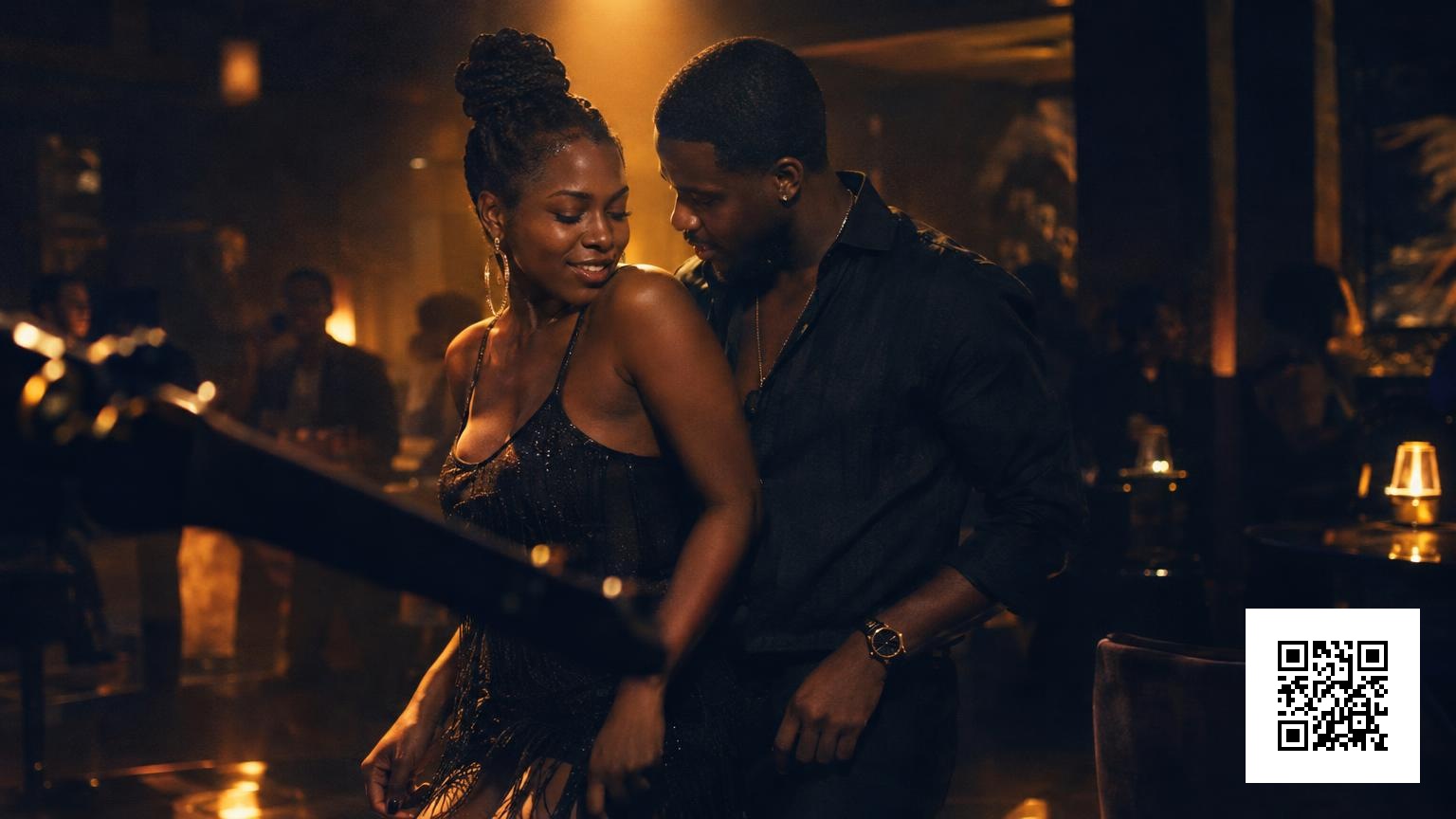
Rhythm that makes the body lean
At 121 beats per minute the pulse finds a middle ground: steady enough to push a dancefloor, loose enough for a body to sway. The tempo is measured and forward-moving rather than frantic; the lokole-led pulse sits soft in the mix, nudging limbs with a gentle insistence. Repetition and restrained dynamics create a slow-building momentum that asks for sustained movement—head nods, close dance, the quiet bounce of late hours.
Percussive heart: lokole and low end
Lokole pulse
The track foregrounds a soft lokole pulse. In Congolese contexts the lokole (a slit-log drum) provides a clear, woody attack that reads in the midrange; here it is used with restraint, its strikes more suggestion than proclamation, giving the groove a tactile, human feel.
Warm sub bass
Underneath, a warm sub anchors the whole arrangement. Its rounded low frequencies smooth the beat’s edges and make the tempo feel physically present—chest and floor vibrate together. The bass doesn’t dominate so much as cradle the other textures, pushing the music into that late-night, almost intimate space.
Muted Congolese guitar and small gestures
A muted Congolese guitar colors the track with clipped, percussive strums. Rather than long, ringing lines it favors short, syncopated phrases that interlock with the lokole. The guitar’s muting keeps it percussive, folding melodic suggestion into rhythmic patterning; notes arrive like light taps, giving the arrangement a conversational, close-range quality.
Lingala: the sound and the plea
The song’s vocal centre is a repeated Lingala refrain, rendered as “Minute mitano.” That single line—a request for five more minutes—sits at the heart of the piece. In Lingala this phrasing carries a directness and a softness at once: the language’s vowel-led syllables let the words linger melodically even as they repeat, turning a simple instruction into a late-night appeal. The tempo and phrasing amplify that intimacy; the repetition becomes less about telling a story and more about holding a single, urgent moment.
Region, context, and atmosphere
The track is presented within a Congo frame (RDC, Congo‑Brazzaville) and appears alongside other Lingala-language titles. Its sonic choices—lokole pulse, Congolese guitar inflection, and the central Lingala refrain—place it firmly within that linguistic and geographic conversation. Mood tags attached to the piece describe it as warm, sensual, intimate, hypnotic, young and late-night; those descriptors match the arrangement’s lean textures and its slow, insistent tempo.
Who it’s for in the room
This is music that privileges close encounters: DJ sets that drop the lights, small clubs, late‑night radio or private listening when the city quiets down. It’s for listeners who want groove without gloss—songs that hold you near and make you want five more minutes.
Congo Velvet Afrohouse
Congo Velvet Afrohouse is named here as a localized strand of Afrohouse that foregrounds Congolese timbres and Lingala vocal phrasing within a club-tempo frame. It sits at the intersection of electronic house rhythms and the rhythmic-melodic vocabulary of Congo music traditions.
Origins and development
This strain grows from the continent-wide spread of house music combined with Congolese popular forms. House’s four-on-the-floor framework met longstanding Congolese practices—guitar-led melodies, Lingala songcraft and traditional percussion like the lokole—producing hybrid tracks that keep dancefloor momentum while privileging local phrasing and pulse.
Defining musical traits
Tempo commonly centers around the low-120s, with steady four-on-the-floor kick and layered syncopated percussion. Bass is warm, sub-heavy rather than abrasive. Melodies often rely on muted electric guitar lines or plucked patterns; vocals are typically concise refrains or hooks in Lingala. Typical palette: electronic drums and synths alongside Congolese guitar and hand percussion.
How this track fits
This recording runs at 121 BPM and is sung in Lingala, with its refrain asking for five more minutes (Minute mitano). The arrangement foregrounds a soft lokole pulse, a muted Congolese guitar and a warm sub, producing a warm, sensual and late-night atmosphere consistent with the Congo Velvet Afrohouse label.
Neighbours to explore
Kinshasa Deep Groove; Congolese Rumba