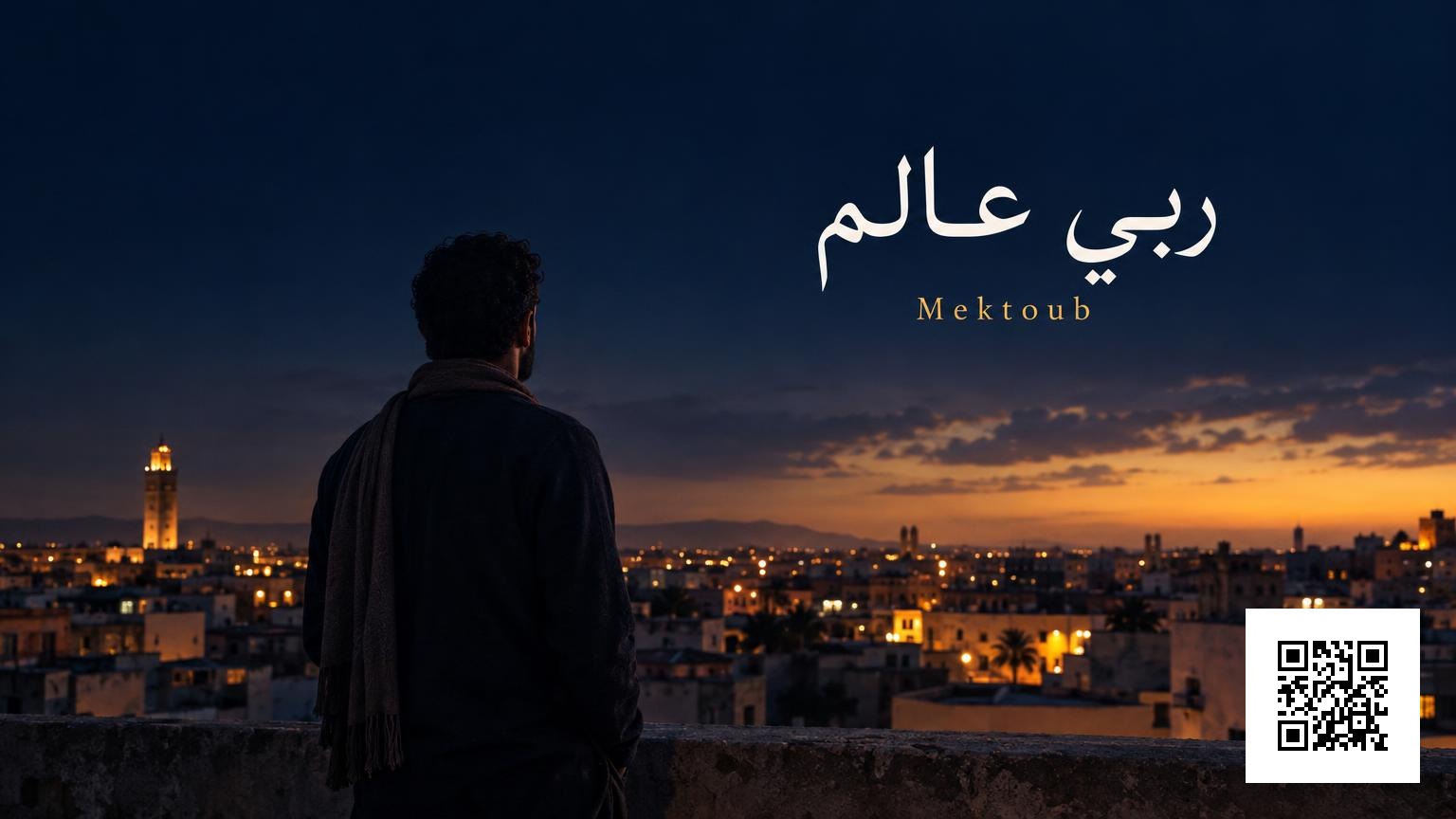
مكتوب, Mektoub, runs at 92 BPM and sings in Arabe algérien (Darija) alongside Français urbain. The singer treats a broken love as something written, a destiny to accept, and the track keeps its voice close and unpushed.
From Algeria the record reaches for a calm that is both spiritual and melancholic. Phrases arrive like confessions, answered by softer French lines that do not argue but reflect.
Voice and bilingual address
The vocal performance moves between two speech registers. Darija delivers short, immediate statements; Français urbain replies in gentler, poetic lines. That alternation is the song’s main architecture.
This pairing is not decorative. In the space where Algerian streets meet everyday bilingual talk, Darija marks an intimate uprightness while French opens a quieter room for reflection. Listeners familiar with both registers recognise how the voices name the same feeling from slightly different angles.
See how bilingual lines work in other pieces from our pages, for example Wolof and French: who ⚽ Teranga Lions is talking to and Darija and Urban French in ربي عالم (Mektoub), where language choice calls particular urban audiences.
A steady 92 BPM midtempo pulse
The exact tempo is 92 BPM. That midtempo figure holds the phrasing long enough for lines to sound like thoughts spoken aloud rather than sung at you.
Because the beat moves neither hurried nor sluggish, the voice can fold around words and leave pauses that feel deliberate. The track’s restraint shapes its spiritual, melancholic mood without theatrical gestures.
Theme: destiny, separation and acceptance
Mektoub frames loss as written. The narrator names separation and then accepts it, turning faith in life into a practical stance rather than a doctrine. Acceptance appears as an everyday obedience to what was written.
That acceptance is voiced in two tones: a raw Darija confession that registers immediate feeling, followed by a reflective French comment that translates sorrow into quiet understanding. The song reaches a place where saying becomes the work of letting go.
Algeria and the city sound
This track sits clearly in Algeria’s contemporary Raï flow. The bilingual speech, the intimate delivery and the theme of personal reckonings point back to Algerian urban life where Raï keeps renewing itself.
On Afrikana Best Sounds this title is presented as part of a modern Raï context and fits late-night playlists and city sequences. For listeners who want more programming around this mood, try Toutes les playlists or browse themed longplays such as African Night Drive Afrobeats Amapiano Afropop listening guide.
Raï moderne / Raï soul
Raï moderne, here called Raï soul, names a contemporary Algerian strain of Raï that keeps the genre’s candid vocal stance while softening it into intimate, urban phrasing. It occupies a recognizable lane in African music where street speech and reflective sentiments meet.
Origins and Algeria
This style grew in Algerian towns and cities as singers reshaped older popular forms into new urban registers. The use of Arabe algérien (Darija) alongside Français urbain in Mektoub reflects the bilingual streets of Algeria and the social spaces where Raï circulates today.
Defining traits
Raï moderne often prefers a midtempo pulse, intimate lead vocal lines and lyrics that mix personal confession with broader social address. In this track the exact 92 BPM is the organising heartbeat, and the vocal approach leans toward prayerful restraint rather than forceful declamation.
How this track fits
مكتوب fits the Raï soul label by foregrounding bilingual vocal exchange and a mood that is doux, spirituel and mélancolique. The arrangement gives the voice space to unfold, and the song emphasises acceptance over theatrical lament.
Styles to explore next
If you want neighbouring textures, look for late-night Algerian compilations and modern Raï sets on Afrikana Best Sounds. For curated sequences that place this mood alongside related midtempo songs try our longplays and playlists such as Assouf of the Dunes, a 92 BPM Tamasheq Desert Blues on Afrikana Best Sounds.