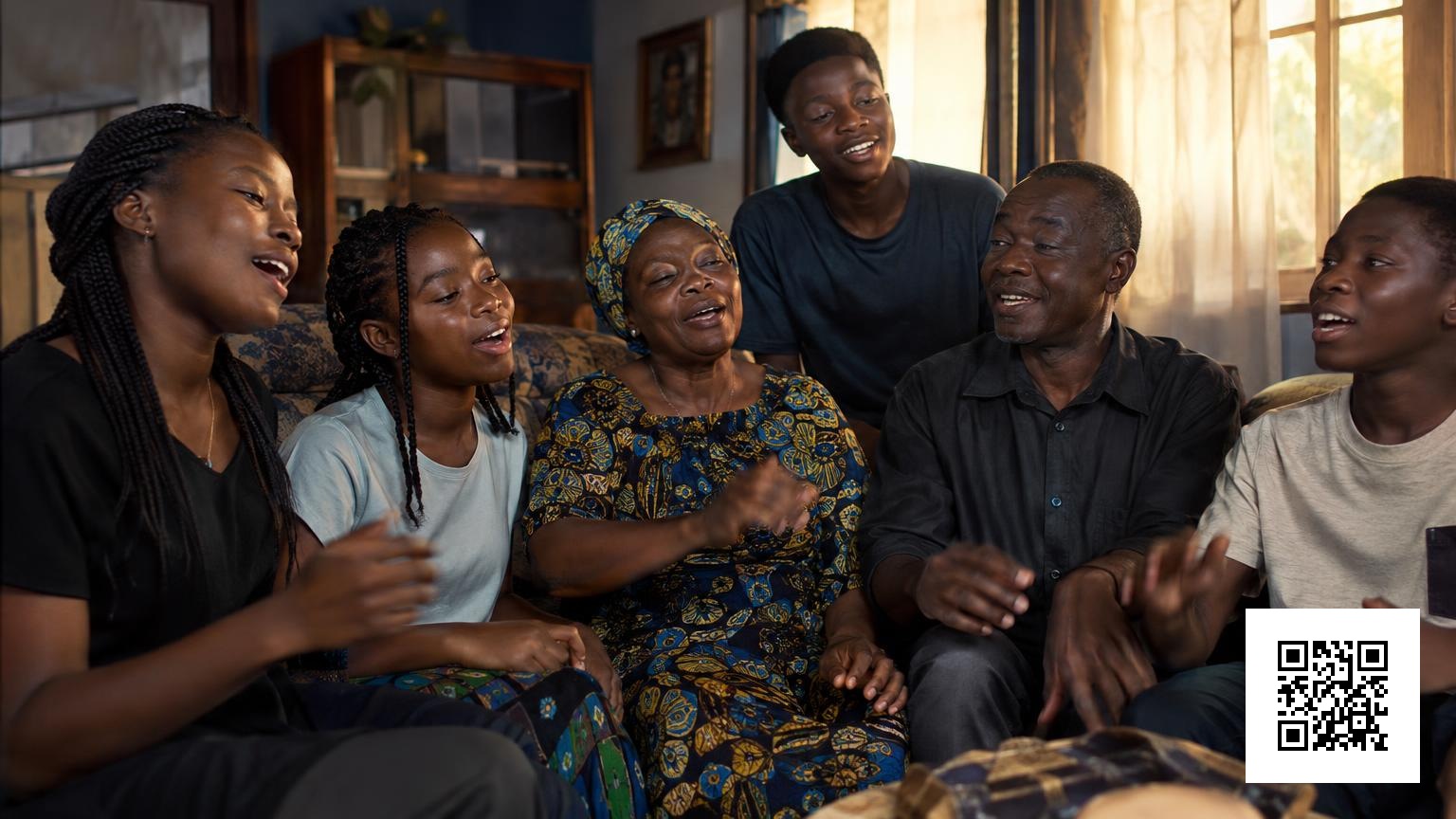
Libota na nga opens as a Lingala hymn to family. The original title appears as "Libota na nga, Lingala Gospel Song | African Gospel Music" and the track names family, love and unity as its theme; its mood is given as moderate and nostalgic.
What arrives first is a steady midtempo pulse and a warm harmonic lift that frames every vocal entry. The arrangement foregrounds voice and refrain so that each line, in Lingala, lands with clear intent and space.
The pulse and tempo
A steady midtempo pulse holds the piece together. It keeps phrasing spacious rather than busy, which lets the vocal lines breathe and repeat without hurry.
That measured pace creates a sense of steadiness. Short phrases come and go against the pulse, and longer refrains open room for harmonies to arrive and settle. For listeners who follow playlists, this pacing pairs well with other Lingala tracks on Afrikana Best Sounds; see Joy & Reunion | African Celebration Songs, close listening to Afro-Zouk, Desert Blues and Zinli.
Textures and instrumental support
Textures stay warm and supportive. Instrumental accompaniment remains in the background and thickens only at refrains, letting the voices remain clearly audible at the front.
Harmonic layers are introduced gradually. When the refrains return, layers increase and create a fuller sound without sudden volume jumps. That choice pushes the emphasis toward communal singing rather than instrumental display. You can compare this restraint with other offerings on the site by browsing Toutes les playlists.
Voices, Lingala phrasing and call and response
A lead voice sings in Lingala and is answered by harmonised refrains. The phrasing uses familiar Lingala cadences, which place cultural nuance inside each syllable and make the theme of family feel immediate.
The arrangement favours layered voices for emphasis. Repeated lines are first stated by the lead, then supported by close harmonies that echo and extend them. That pattern makes individual words feel shared and communal rather than solitary.
How the song builds and where it sits
The track builds by adding voices and harmonic density over the persistent pulse. Dynamics increase through more singers rather than louder instruments, so intensity comes from company instead of volume.
Listed as Gospel africain and associated with RDC and Congo-Brazzaville, the song frames gratitude and domestic courage as musical subjects. For context within the site and the app, see Heart of Africa : tous les articles and AFRIKANA: free app, nine African webradios, African music. Discover AFRIKANA, stream African radio & songs on mobile.
Gospel africain
Gospel africain is the style named for this track and it sits inside Central African expressions of faith where communal singing and family themes are central. On Libota na nga the label points to priorities: voice, harmony and a devotional focus.
Where the style sits
Here the style is rooted in the Congo region. The use of Lingala and the countries RDC and Congo-Brazzaville anchor the track in Central African musical habits of public prayer and domestic song, where hymns often address home life and shared resilience.
Defining traits on this recording
This recording shows a steady midtempo pulse, nostalgic harmonies and a vocal approach that frames personal feeling as communal address. The mood is moderate and nostalgic, and the arrangement favours close, layered singing over instrumental ornament.
How Libota na nga fits or bends the style
The song fits the gospel africain label by keeping the voice central and by making family the explicit subject. It bends expectations of public spectacle by choosing restraint: density is achieved by adding vocal layers rather than by sudden instrumental entrances. That restraint reveals « Le goût de ça » (the taste of that), a quiet savour found in repeated refrains and shared lines.
Styles to explore next
If you want to widen the listening field from this Lingala hymn, try Congolese Rumba or the hybrid textures listed among related titles on Afrikana Best Sounds, which offer other uses of Lingala phrasing and communal chorus.