Rhythm and how it moves the body
At 88 BPM the song settles into a measured, walking pulse—slow enough to breathe, quick enough to keep feet engaged. The beat doesn’t demand a frantic response; it suggests sway, the kind of step you take between rooms at a family gathering. Hand percussion sketches a soft, literal heartbeat while light shakers add a fine-grained propulsion that keeps the guitar’s syncopations afloat. The overall effect is domestic: movement that mirrors conversation rather than spectacle.
Instruments and what they are in their culture
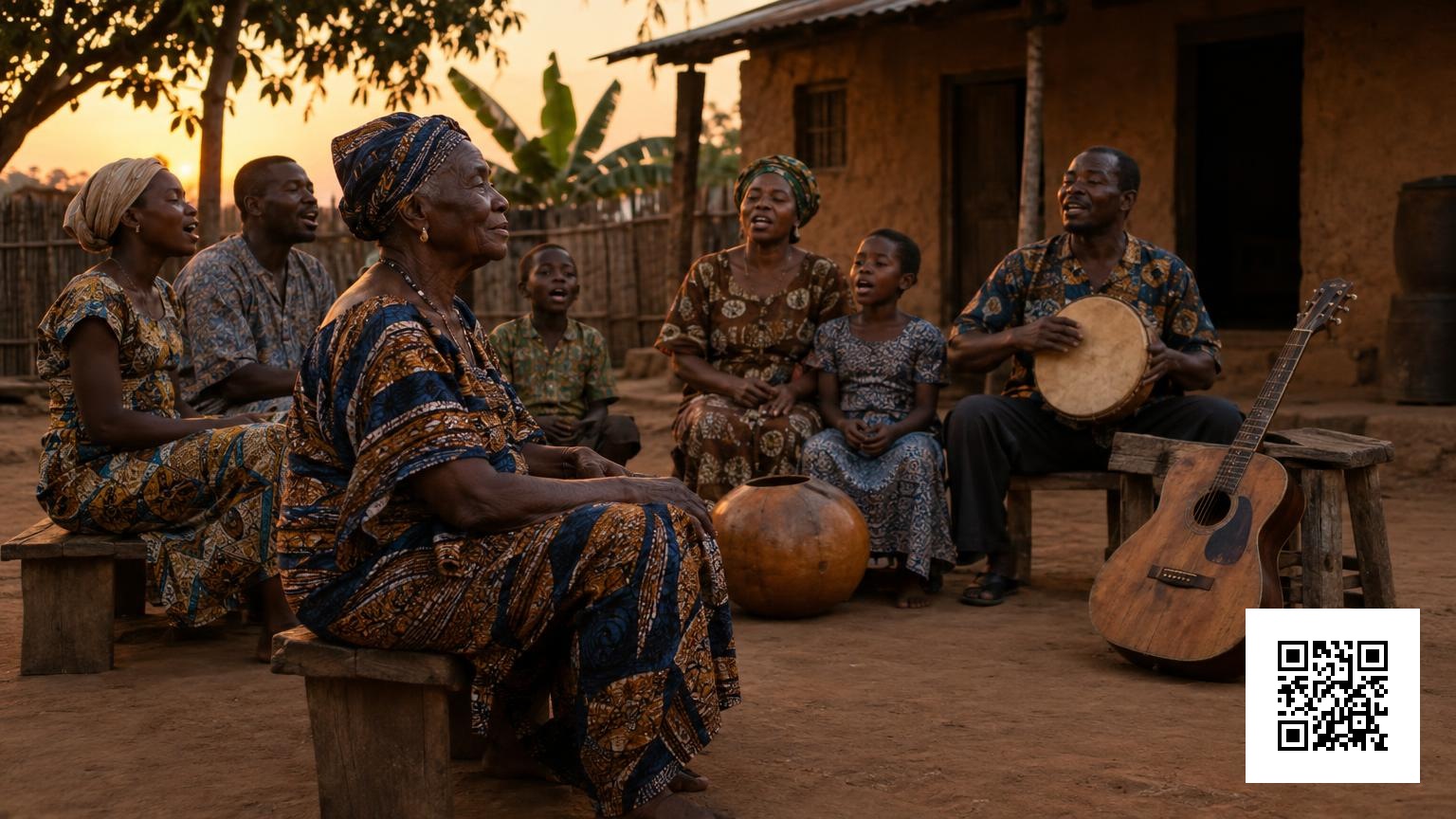
The arrangement centers on a palm-wine acoustic guitar whose plucked strands cut through the mix with a dry, intimate clarity. Here the guitar functions as both accompanist and storyteller—its rhythmic patterns create space for the lead voice to speak and the choir to respond. Hand percussion provides a skinlike warmth, the kind of percussive touch common in village settings; it reads as friendly contact rather than orchestral punctuation. Light shakers fill micro-gaps, producing an air that suggests people gathered close together, holding time between phrases.
Guitar and percussion
The guitar’s timbre and the understated percussion point to domestic performance: songs for porches, kitchen corners and informal circles. Instruments aren’t showpieces; they frame speech and memory.
The Fon language: its sound and what it carries
Sung entirely in Fon, the track uses the language as its primary instrument of address. Fon’s tones and vowel shapes make phrases that can land as soft entreaties or firm remembrances; within this performance, Fon carries gratitude and family memory. Because the lyrics are delivered only in Fon, the vocal lines act as a direct conversation with listeners who share that tongue. The lead voice offers a personal line while a small call-and-response choir answers—turning individual memory into a communal affirmation and making the language itself the social glue of the piece.
Region, tradition and listening contexts
The song sits in the Fon cultural area of southern Benin and maps directly onto everyday listening situations: at home, in village gatherings and at family reunions. Those are the places where the song’s instrumentation and vocal layout naturally belong—guitars tuned for nearby ears, percussion loud enough to be heard across a courtyard, voices arranged for echo and reply. The performance feels local and immediate rather than staged for distant audiences.
Energy and who it is for
The energy is intimate and warm rather than exuberant. The arrangement and the vocal delivery make a piece designed for kin: grandchildren, aunties, grandmothers, neighbors who keep family memory. The call-and-response dynamic transforms solitary remembrance into a group act of gratitude, an exchange that privileges closeness over polish. Pressing play is like stepping into a small circle where voices remember and the instruments hold space for those recollections.
Palm-wine Vocal Tradition
The palm-wine vocal tradition sits within West African acoustic popular music and finds local expression in southern Benin’s Fon area. On Alèkè Gbè the style frames a Fon-language tribute to grandmothers, bringing intimate domestic singing into a measured, guitar-led vernacular.
Origins and development
Palm-wine grew in coastal West African communities as small, acoustic ensemble music tied to social gatherings. The style developed around portable guitars and hand percussion, marrying imported string practice to local rhythmic patterns and communal singing formats used at homes and village meetings.
Defining musical traits
Tempo tends to be moderate and relaxed; this tradition favors steady, mid-tempo grooves rather than driving dance tempos. Guitar is central — fingerpicked or soft strumming with syncopated patterns — while low end is usually modest, supplied by guitar patterns and light percussion. Drum patterns are hand-held: claps, small hand percussion and shakers. Vocally it relies on a lead voice supported by call-and-response from a small choir, producing close, conversational delivery.
How this track fits
Alèkè Gbè sits at 88 BPM and uses palm-wine acoustic guitar, hand percussion and light shakers. The song is sung entirely in Fon, with an intimate lead voice answered by a small call-and-response choir, and its lyrics are a warm tribute to Beninese grandmothers. The arrangement and measured pace place it squarely in the palm-wine idiom while borrowing gentle West African soul coloration.
Neighbouring styles to explore
Highlife, West African soul