The third francophone music industries fair takes place in Cotonou on 12 and 13 November, and its programme brings copyright, artificial intelligence, export strategies and live performance into the same room. The first day opens under the banner From reach to economic power and includes an explicit fashion-and-music sequence.
For people who follow contemporary African music, the meeting matters because it moves conversations about monetization, metadata and ownership toward practical outcomes: an Industry Highlight cites a recent hit, a residency precedes a short collaborative release, and a showcase stage will put emerging acts on stage from several countries.
From reach to economic power
The opening day frames institutional interventions beside a fashion-and-music sequence that links image and musical reach. An Industry Highlight focuses on music monetization and ties artistic creation to economic valorization, using a recent hit titled Mélo décalé as an example of how a public success can be discussed in commercial terms.
Sessions promise concrete talk about diversifying revenues and spotting new talent. That practical bent means managers, promoters and artists will hear the same leads about rights clearance, promotional partnerships and how a recorded work becomes an economic asset.
Rights, metadata and the live economy
A session called Who owns African music? brings rights, metadata and the use of ISRC codes into focus. The conversation pairs ownership questions with the technical work of tracking exploitation, because traceable identifiers and clear metadata are repeatedly named as the foundation of export strategies and licensing talks.
Panels on live performance will examine the role of shows in local economic development and include speakers connected to major promoters and event platforms. A roundtable will explore synergies between sport and music, imagining collaborations with a national football federation and international promoters for branded events and partnerships.
From 7 to 11 November a creative residency run by Lab.Music gathers artists and beatmakers to produce a short collaborative release with possible distribution by a major international label. The residency and the showcase stage for emerging artists are both presented as pathways from spotting talent to professional connections.
Hear the Sahel sound on Afrikana
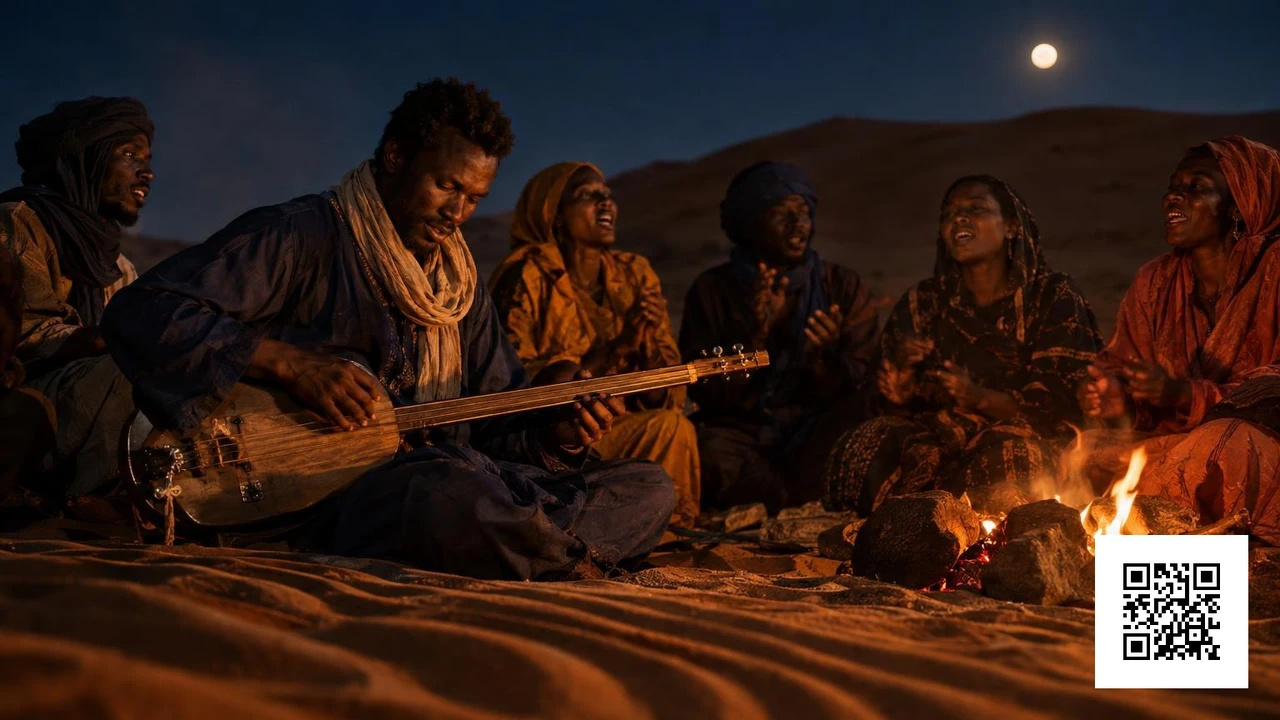
On Afrikana Best Sounds you can hear Desert Reunion, a Desert Blues single described as guitar-driven and hypnotic, sung in Tamasheq with French and other Sahelian lines; its mood is warm, trance-like and communal, and its tempo is 92 BPM.
Listen for lead lines in Tamasheq answered by communal voices and occasional French refrains. The description highlights pentatonic slide guitar phrases and a kora-like hybrid texture; percussion sits in a trance-leaning 6/8 groove that supports group singing and a melodic slide solo. These are the details that connect the conference themes to actual music: rights and metadata decide how such tracks travel into playlists, and residency projects feed the showcase stages programmers search for.
Le goût de ça, the taste of that, appears when you hear community voices and slide phrases meet on the same track, it is the exact sound the showcase stage aims to surface.
Desert Blues (Tishoumaren / Assouf)
Desert Blues, labeled here as Tishoumaren or Assouf, sits within the Sahel and Sahara musical threads and often travels through regional radio and curated playlists. It blends older song forms with contemporary recording approaches.
Origins and history
The style grew from Sahelian song forms shaped by movement across desert spaces. Themes such as memory, homecoming and communal life recur in lyrics and performance practice, and modern releases keep that link while appearing on radio, webradio and in event programmes.
Defining musical traits
Tempo sits in a steady midrange; the single highlighted in this article runs at 92 BPM. Vocal work often uses a lead voice answered by a group. Melodies commonly follow pentatonic lines and slide guitar figures appear as a central melodic device. Rhythms can favour repeating, trance-leaning patterns that invite call-and-response singing.
How the track fits
The track presented earlier follows these conventions: a lead in Tamasheq met by communal replies, French phrases broadening the address, and a guitar-driven bed foregrounding melodic slide. Production choices described for the single emphasise intimate string tones, sparse low end and a melodic solo that links ancestral phrasing with a contemporary desert blues expression.
Styles to explore next
After this, listeners may explore neighbouring Sahelian threads and other Desert Voices pieces on Afrikana Best Sounds, or seek titles that use similar midtempo pockets and layered vocal calls. Those adjacent styles illuminate how regional song forms adapt to modern circulation and programming.
Original report: Read the original report on Music In Africa