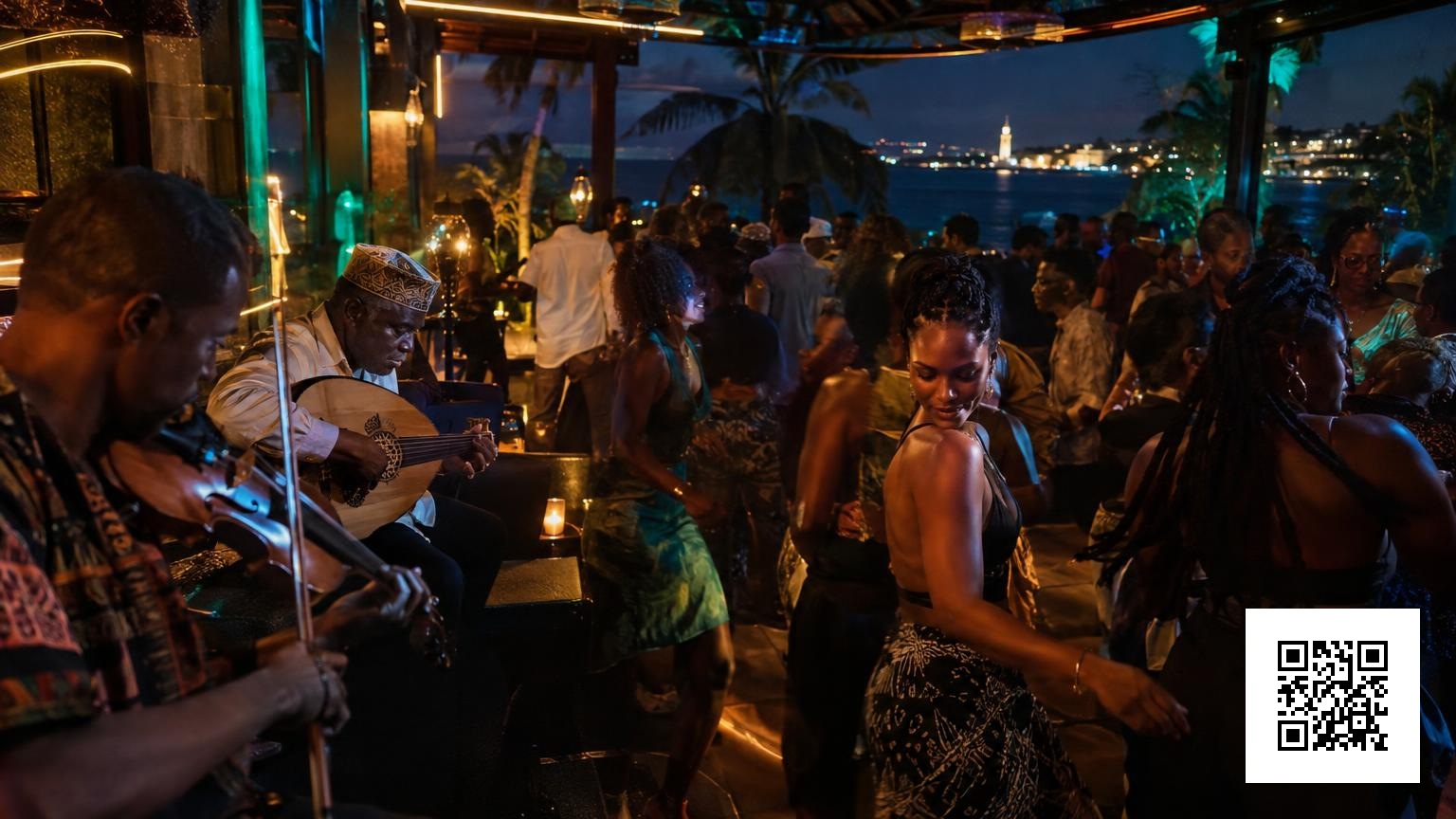
Rhythm and how it moves the body
At 128 BPM the track sets a peak-hours tempo: immediate, forward-driving and relentless. A steady kick pattern holds the downbeats while a mchiriku pulse — a quick, recurring percussive figure — threads between kicks and hi-hats to create a circular, insistently looping motion. The groove never rests; it negotiates pockets of space so melodic fragments can cut in and leave without stopping momentum. The overall effect is kinetic rather than posed: hips and feet meet a beat that asks for continuous movement, not intermittent reactions.
Taarab strings and oud in the mix
Violin: short stabs and calls
The violin works in bursts — bright, punctuated stabs that act like exclamation marks over the club groove. Those short, sharp lines slice through the low frequencies of the kick and bass, making immediate hooks out of brief gestures. The attack of each bow stroke is prioritized; sustain is minimal, which keeps the arrangement airy and full of little surprises.
Oud: low pulse and color
The oud supplies a plucked, darker body beneath the higher strings. It anchors the harmonic center without crowding the dance pocket, its rounded timbre connecting salon-style intimacy to the larger club arrangement. Where the violin skates on the surface, the oud tethers the track to a coastal tonal gravity.
Swahili: how the language sits in the mix
Swahili’s open syllables and clear vowels give the vocal lines a natural melodic lift. Phrasing tends to unfold cleanly across the beat, which makes call-and-response ideas feel immediate even within an electronic setting. The voice functions as communal address: direct and conversational, it rides the groove with enough presence to guide the dance while leaving room for instrumental punctuation.
Zanzibar and the coastal soundworld
This recording places taarab-derived elements into a late-night club context from the Swahili coast. The bowed-strings vocabulary and the oud’s tonal center recall courtyard and salon textures found along Zanzibar’s shoreline, but they’re fitted into a modern, pulsing framework rather than presented as a pastiche. Coastal melodic gestures operate here like seasoning: they shape the track’s color and remind the listener where these melodic habits come from while the beat keeps the body moving forward.
Energy, mood and who it’s for
The track reads as euphoric and urgent — fast tempo, persistent groove, and string stabs that flirt and excite. It’s engineered for the late-night peak: DJs can drop it to accelerate momentum, dancers can lock in for long stretches, and listeners who like electronic music with coastal instrumental color will find its immediacy rewarding. The music favors extension over resolution; it keeps the evening open and the floor in motion.
Dar Afrohouse
Dar Afrohouse names a hybrid that places taarab-derived strings and Swahili singing into East African club life. It occupies a clear spot in African music where coastal salon instruments meet late-night, peak-hour dancefloors.
Origins and development
Rooted on the Tanzanian coast and Zanzibar, Dar Afrohouse grew where taarab’s bowed strings and call-and-response sensibilities met urban nightlife. Musicians and DJs adapted salon textures—violin, oud and Swahili phrasing—to the steady, nightclub tempos of Dar es Salaam and coastal circuits, shifting melodic gestures into looped, danceable forms.
Defining musical traits
Tempo leans fast—this recording runs at 128 BPM—aimed at peak-hour energy. Drumwork is a rolling club groove with a mchiriku pulse that creates looping propulsion; kick and hi-hat insist on forward motion. Bass stays repetitive and propulsive to sustain momentum. Vocals in Swahili read as direct, communal lines; typical acoustic colors are violin (short, punctuated stabs) and oud (low, plucked body) layered over electronic percussion.
How this track fits
Bado usiku locks taarab violin stabs and oud into a rolling Afrohouse pulse at 128 BPM. The violin’s sharp, staccato gestures cut through the kick and hi-hat as instant hooks while the oud supplies darker, plucked weight beneath. Percussion anchors the spine and the mchiriku pulse keeps time feeling circular, driving a fast, euphoric late‑night groove that prioritizes continuous movement.
Next styles to explore
Taarab, Afrohouse