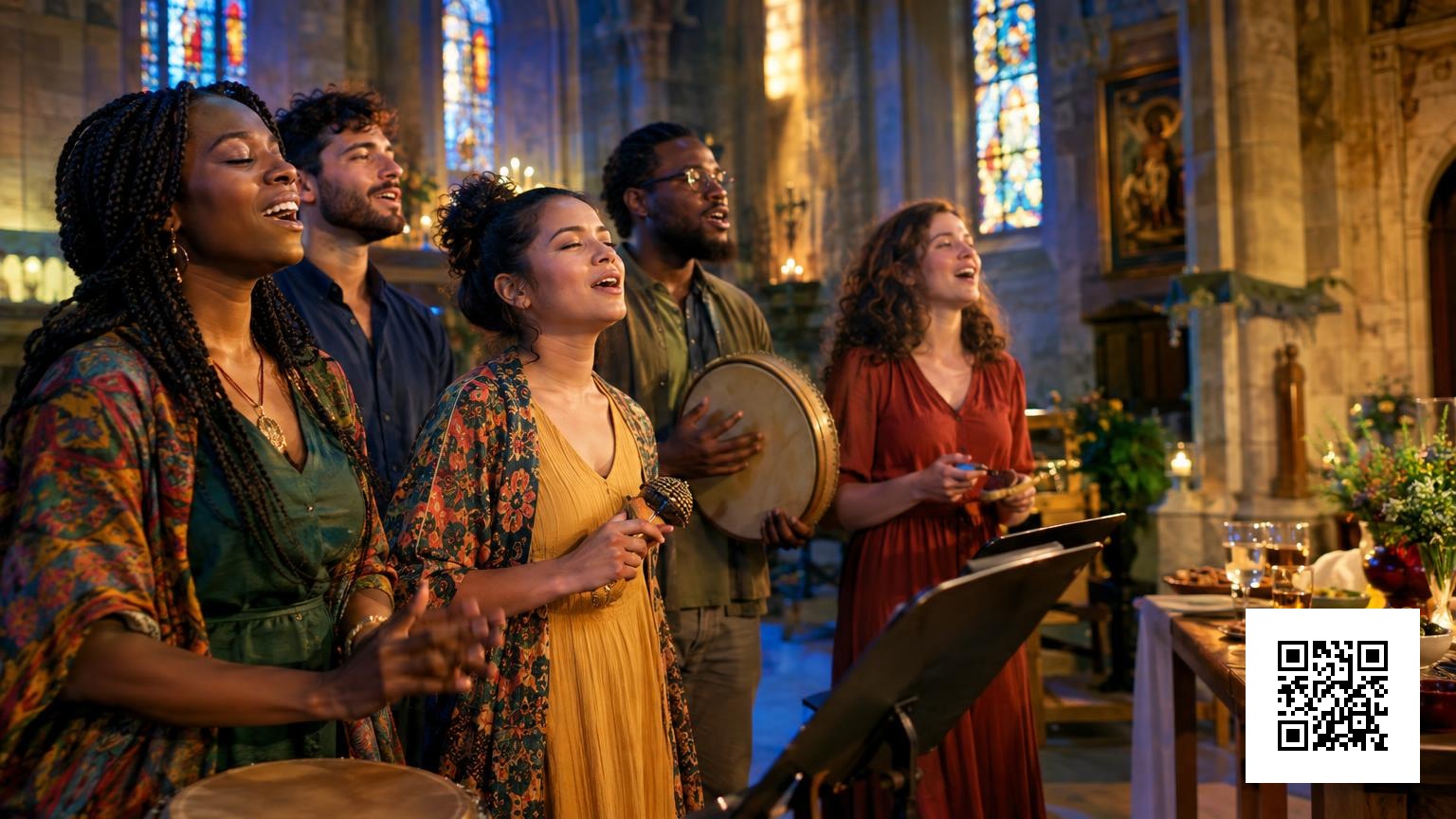
On Sunday 29 November 2026 at 15 h an African choir will perform at Saint-Vincent-de-Paul church, 9 rue de Riquewihr in Colmar to mark the 10th anniversary of an association created at the end of 2016 to help people who cannot access healthcare for financial reasons.
For listeners who search for taarab zanzibar, a new somali gospel song or Swahili music, this concert is a local moment where choral voices bring African repertoires into civic life; admission is free and a plate will pass for donations, with a convivial apéritif afterwards.
Practical details for the benefit concert
The concert begins at 15 h on Sunday 29 novembre and takes place in the Saint-Vincent-de-Paul church in Colmar. The venue address is 9 rue de Riquewihr. Entry is free and donations will be collected by plate for the association that supports people without social coverage who cannot afford supplementary insurance and some non-reimbursed medicines.
After the performance a convivial apéritif will be offered, giving the community a chance to meet singers and volunteers. If you want more local context about African music events and programming, see Heart of Africa : tous les articles.
Why this fundraiser matters for healthcare
The association was created at the end of 2016 to help people who cannot access healthcare because they lack the financial means. Ten years on, it still focuses on people without social coverage who struggle with the cost of some medicines that are not reimbursed by social security.
A choir concert is a practical way to bring neighbours together. Small donations collected on the plate are simple gestures that answer a clear need; they stack up where formal coverage is missing. Le goût de ça appears in the shared cups, the smiles at the reception table and the direct help a single donation can provide.
Island voices on AFRIKANA and the place of Dodo Solèy
To hear how island song traditions translate to staged singing, listen on AFRIKANA Best Sounds to Dodo Solèy, a tender Afro-Zouk / Séga fusion sung primarily in Réunion Creole with touches of Mauritian Creole and French phrases. The track runs at 68 BPM and places ravanne and kayamb patterns at its rhythmic core alongside acoustic guitar, a round warm bass and airy synth pads.
Layered female voices answer each other in a Creole call-and-response that evokes bedtime ritual and island night air. That shared focus on communal voice links the recorded piece to the choral timbre you will hear in Colmar: arranged voices rather than spotlight solos, shared lines rather than solo display.
On Afrikana Best Sounds, Dodo Solèy sits beside several related island titles that help map small differences. Sous la Route shares style and languages with Dodo Solèy. Fyer Nou shares the Afro-Zouk romance style and lists Créole réunionnais, créole mauricien and français among its languages. Retrouvailles Sous les Palmiers is flagged for Maloya Roots while keeping Réunion Creole at its centre. Somin Lontan appears alongside Dodo Solèy with shared style and language elements. Each title highlights a different emphasis: some stick to island groove and love song phrasing, one names Maloya roots, and others place language at the heart of their identity.
If you want to compare recorded island songs with choreographies and live programming, try the playlist Other African Languages | Voices of Africa and the themed selection African Love Songs | Love & Romance. For a sense of how island groove moves a crowd, read Zouk tropical night at Le 211 with Sous la Route.
The concert in Colmar is a moment where community giving meets the textures of Music of Africa, and the track Dodo Solèy offers one recorded route into those island colours. The video for that single is placed after this chapter so you can press play and hear the sound described here.
Afro-Zouk / Séga fusion
Afro-Zouk / Séga fusion names an island style rooted in the Mascarene Islands and presented on AFRIKANA Best Sounds as a tender, rhythm-centred approach to song. This trackwise label connects Réunion and Mauritius repertoires with contemporary arrangements.
Origins and regional place
The style comes from the Mascarene Islands, notably Réunion and Mauritius, where local Creole languages shape melodic phrasing and song identity. On AFRIKANA these titles are framed as island groove and love songs, and they sit alongside recordings that claim Maloya or Afro-Zouk romance as their root.
Defining musical traits
This style often blends ancestral percussion and gentle modern textures. On Dodo Solèy the rhythm relies on ravanne and kayamb patterns supported by acoustic guitar, a round warm bass and airy synth pads. Vocals are layered, with female voices answering each other in call-and-response phrasing. The track’s tempo is 68 BPM, which leaves space for intimate vocal lines.
How this track fits the style
Dodo Solèy sits squarely in the Afro-Zouk / Séga fusion label: it foregrounds island percussion, communal vocal arranging and a soothing mood. The arrangement keeps instrumental colours familiar to the Mascarene palette while easing them into contemporary production choices, prioritising voice and ritual over a dancefloor push.
Styles to explore next
If you want neighbouring sounds, try Maloya Roots for a more folkloric Réunion accent, or explore taarab and Swahili song traditions to follow different coastal vocal and choral practices. These styles expose different relationships between language, melody and communal singing on the continent and its islands.
Original report: Read the original report on dna.fr