Abomey Never Sleeps: The Sound, Stories and Culture of Modern Zinli
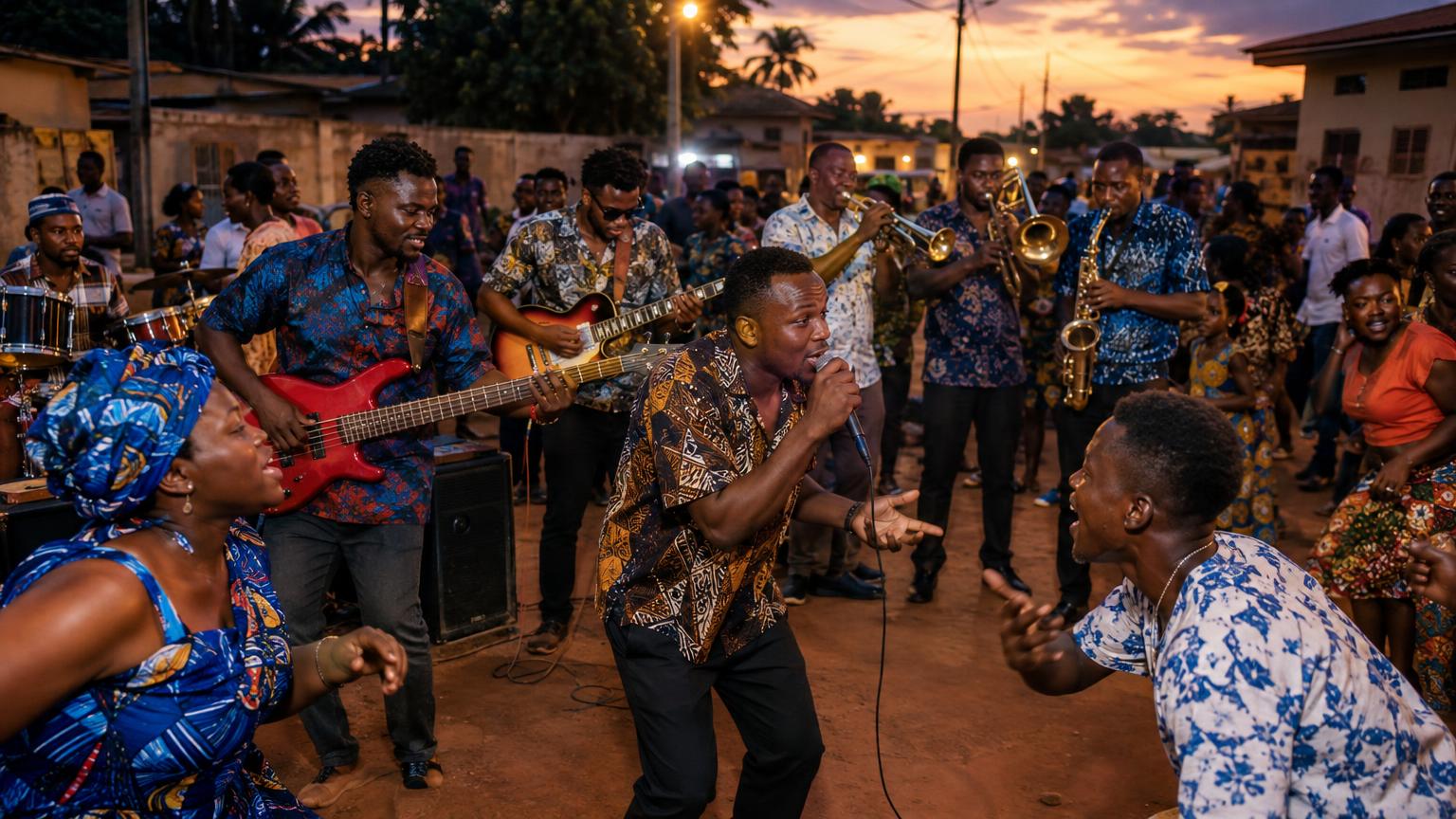
“Abomey Never Sleeps” exemplifies a contemporary Beninese zinli that blends a bouncing low end, bright highlife guitar lines and celebratory brass into a melodic, warmly infectious groove. The song’s French verses, an English refrain and Fongbé responses create layers of meaning and belonging for diverse listeners.
Published on AFRIKANA, the official video (Abomey Never Sleeps - Official AFRIKANA Release, published 2026-03-12) captures street scenes, intergenerational dancing and the communal energy that fuels the track. The recording and performance practices it documents show how music functions as living transmission in Abomey.
Sound and Arrangement: bass, highlife guitar and festive brass
The foundation is a forward, dance-oriented bassline that locks with percussion to propel bodies through public spaces. This ‘basse dansante’ gives the song its irresistible drive and anchors arrangements built for communal dancing.
Guitar parts borrow from West African highlife; clean, melodic arpeggios and interlocking rhythmic motifs that sit above the bass and interact with vocals. Highlife guitar provides melodic hooks and call‑and‑response opportunities with brass.
Brass sections are arranged to feel celebratory rather than aggressive: short, syncopated bursts and harmonized fanfares punctuate verses and lift choruses, signalling moments for collective clapping, horns and movement.
Language, lyrics and the social choreography of voice
Using French for narrative verses makes the song accessible across Benin’s francophone media and urban listeners, while the English refrain functions as a catchy global hook designed to invite singalong from international audiences.
Fongbé responses anchor the track in local memory and ritual: brief, pitched phrases that answer French lines or the English refrain establish a participatory dialogue. These responses are often improvised live, allowing elders and youth to exchange phrases and cues.
Lyrically the theme;‘living transmission’; appears in everyday imagery: workshop frontages, market corners, schoolyards and family courtyards. The words map how rhythm gathers generations and transforms public space into a classroom of embodied knowledge.
Performance, community life and intergenerational transmission
Street performances and video scenes show how the song becomes a vehicle for social learning: children mimic steps, young players copy guitar riffs, and older musicians correct phrasing or introduce variations. That iterative sharing is the core of transmission.
In Abomey, public processions, wakes and market celebrations are contexts where zinli functions both as entertainment and as a social binder. The music’s structure; repetitive grooves with space for call‑and‑response; makes it ideal for teaching through participation rather than formal instruction.
Practical tools such as notation snippets, short tutorial clips and the official AFRIKANA video help spread these forms beyond the locality while preserving opportunities for live exchange. When relevant, mobile apps focused on regional repertoire can host time-stamped clips, chord outlines and language glosses to support learners while respecting local custodianship.